Leonard Koren: Modernism vs. Wabi-Sabi
4 min
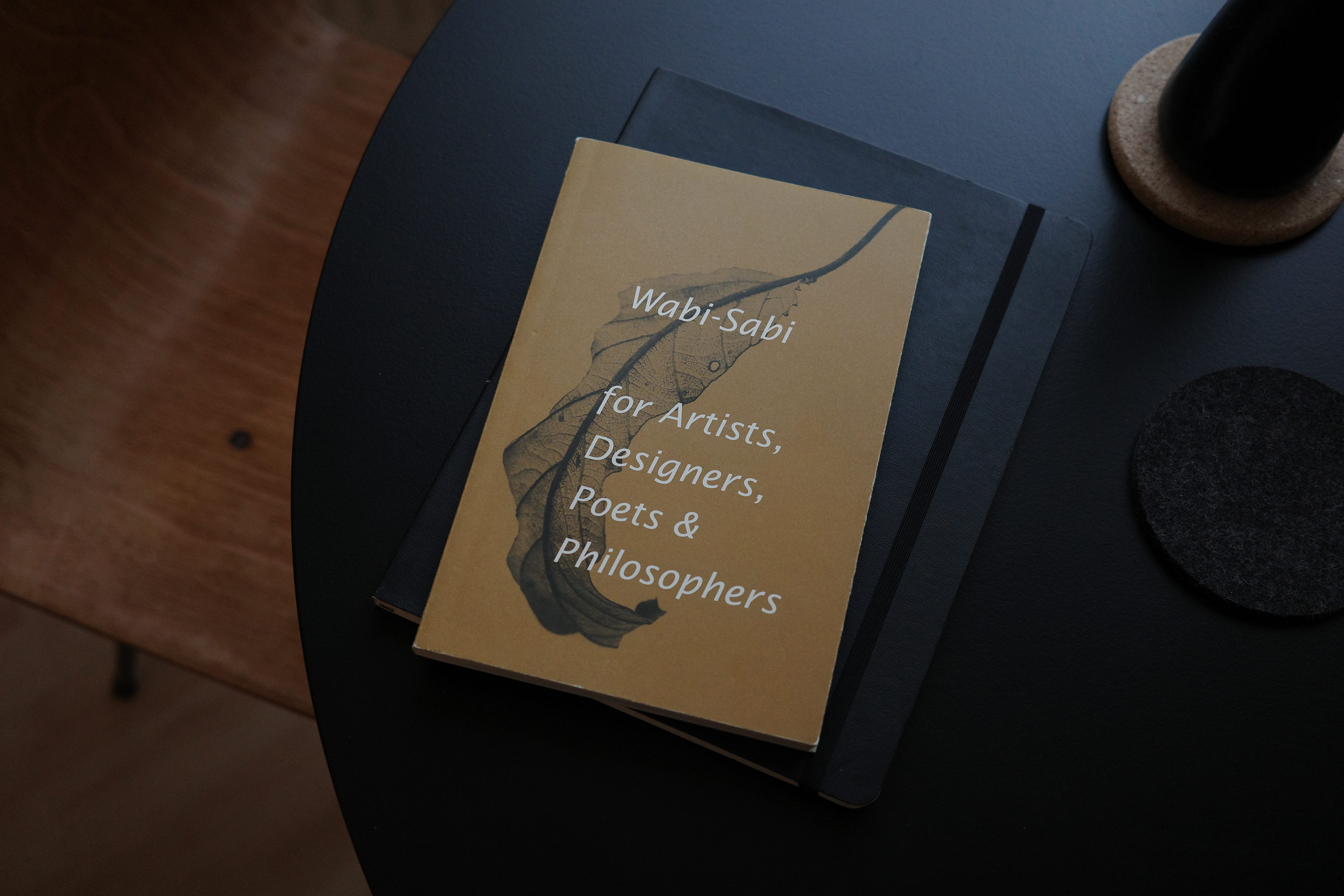
Some years ago during a lunch outing with colleagues at Ableton, a passing joke was made along the lines of “Yeah, Live is very wabi-sabi.” Live being Ableton’s rather technical and modernist music-making software, and wabi-sabi being a traditional Japanese aesthetic theory anchored in impermanence and subjectivity. While the quip was a sarcastic comment made in jest, it did stick in my head a bit. Live certainly exhibits a modernist design philosophy based on explicit rationality, but it also has an austereness and simplicity that I associate with Japanese design. Since then I’ve been curious to better understand the overlap between conventional European modernism and traditional Japanese values of beauty.
Luckily I didn’t have to look far as while reading Wabi-Sabi: for Artists, Designers, Poets & Philosophers by Leonard Koren I was excited to see him directly address their similarities and differences. Leonard Koren is an accomplished artist and author of various books exploring art and creativity, including On Creating Things Aesthetic and Which “Aesthetics” Do You Mean?: Ten Definitions. I hope he doesn’t mind me sharing some of his insights here verbatim:
Similarities
- Both apply to all manner of man-made objects, spaces, and designs.
- Both are strong reactions against the dominant established sensibilities of their time. Modernism was a radical departure from 19th-century classicism and eclecticism. Wabi-sabi was a radical departure from the Chinese perfection and gorgeousness of the 16th-century and earlier.
- Both eschew any decoration that is not integral to structure.
- Both are abstract, nonrepresentational ideals of beauty.
- Both have readily identifiable surface characteristics. Modernism is seamless, polished and smooth. Wabi-sabi is earthy, imperfect and variegated.
He goes on to include a table that compares some of their key characteristics:
| Modernism | Wab-sabi |
|---|---|
| Primarily expressed in the public domain | Primarily expressed in the private domain |
| Implies a logical, rational worldview | Implies an intuitive worldview |
| Absolute | Relative |
| Looks for universal, prototypical solutions | Looks for personal, idiosyncratic solutions |
| Mass-produced/modular | One-of-a-kind/variable |
| Expresses faith in progress | There is no progress |
| Future-oriented | Present-oriented |
| Believes in the control of nature | Believes in the fundamental uncontrollability of nature |
| Romanticizes technology | Romanticizes nature |
| People adapting to machines | People adapting to nature |
| Geometric organization of form (sharp, precise, definite shapes and edges) | Organic organization of form (soft, vague shapes and edges) |
| The box as metaphor (rectilinear, precise, contained) | The bowl as metaphor (free shape, open at top) |
| Manmade materials | Natural materials |
| Ostensibly slick | Ostensibly crude |
| Needs to be well-maintained | Accommodates to degradation and attrition |
| Purity makes its expression richer | Corrosion and contamination make its expression richer |
| Solicits the reduction of sensory information | Solicits the expansion of sensory information |
| Is intolerant of ambiguity and contradiction | Is comfortable with ambiguity and contradiction |
| Cool | White |
| Generally light and bright | Generally dark and dim |
| Function and utility are primary values | Function and utility are not so important |
| Perfect materiality is an ideal | Perfect immateriality is an ideal |
| Everlasting | To everything there is a season |
Considering the complex nature of cultural ideas of beauty I would understand if different people have different feelings about this particular breakdown. Regardless, I found the comparision enlightening and it’s helped me to better understand which characteristics I value most in my own design work.
The relationship of aesthetics to our personal well-being is one reason why I’ve been drawn to this topic. Today’s practice of digital product design, largely still driven by modernist design philosolophy, has in various ways had adverse effects on our mental health. Could wabi-sabi offer a healthier perspective?
Let’s take for example the role of materiality. While it may be difficult to imagine how physical wear and tactile imperfection apply to digital products, the associated qualities of intimacy, mindfulness, subtlety, and slowness could be relevant. In lieu of materiality, a similar characteristic is authenticity. The idea of working with “honest” raw material has been long-standing in modernism. A strong commitment to honesty, either in a digital product’s conceptual presentation or branding, could be one method of doing good for our users.
I’d like to see how I, as a digital product designer, can produce work that affords a healthy thoughtfulness in the same way that wabi-sabi does. In that vein, there are a few other titles I’ve been reading that have helped me explore this:
- Designing Design by Kenya Hara
- Just Enough Design by Taku Satoh
- In Praise of Shadows by Jun’ichirō Tanizaki
- Super Normal: Sensations of the Ordinary by Jasper Morrison and Naoto Fukasawa
If this comparison of modernism and wab-sabi has piqued your interest I would highly recommend picking up the book or its follow-up Wabi-Sabi: Further Thoughts, which is next on my reading list. I would also recommend checking out some of Leonard Koren’s other books which are often short, affordable (if not out of print), and easy to read.